News
Events
GCF Board Meeting B.45 in Tajikistan
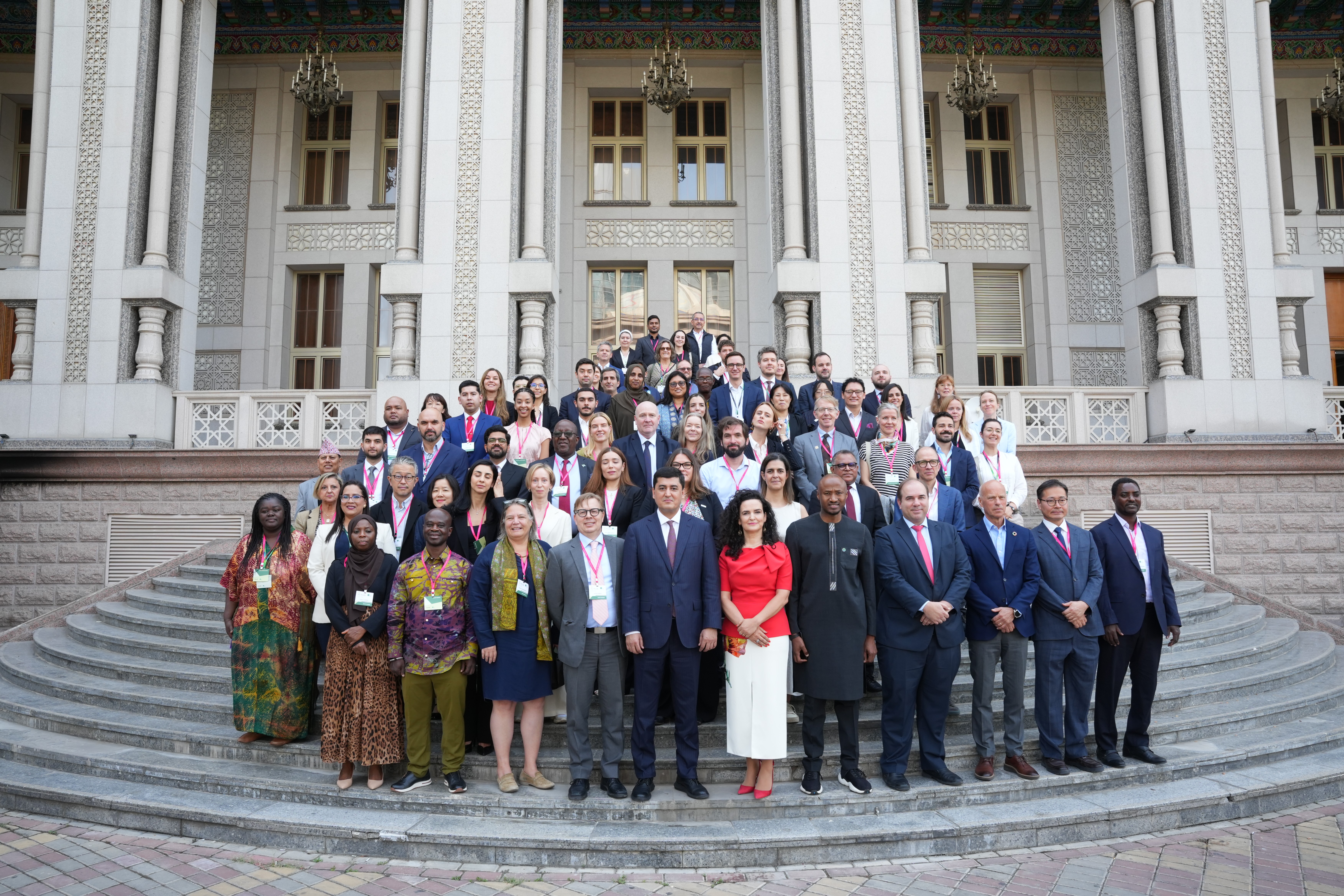
GCF Board closes B.45 with Adaptation and African leadership at the centre
The Green Climate Fund (GCF) Board closed its 45th meeting in Dushanbe, Tajikistan, on 2 July 2026. Ambassador Seyni Nafo, Coordinator of the Africa Adaptation Initiative (AAI) and Co-Chair of the GCF Board, steered the session alongside Co-Chair Leif Holmberg. The Board approved USD 369.1 million in new climate finance across ten projects. With co-financing, the portfolio reaches USD 700.6 million.
Adaptation moves to the front
All ten approved projects focus on adaptation or include adaptation components. This matters for a continent facing worsening floods, droughts and heatwaves. Sixty-five per cent of adaptation funding, in grant-equivalent terms, went to Least Developed Countries, Small Island Developing States and Africa.
Ambassador Nafo welcomed the shift. He noted that the focus on adaptation answers the urgent needs of countries already living with climate impacts. That priority sits at the heart of AAI's mandate under the African Union.
First-ever finance for the Central African Republic
The Board approved the first standalone GCF project in the Central African Republic. It channels USD 69.1 million to climate-resilient water, sanitation and disaster management for the country's most vulnerable children. UNICEF will deliver the work.
Two further African projects secured approval. Côte d'Ivoire gained support for sustainable land management and climate-resilient agri-food systems, delivered with CGIAR. Togo will strengthen its health system against climate-sensitive risks, delivered with GIZ.
Ambassador Nafo tied these approvals to reach. He described the Board as extending GCF's support to some of the most vulnerable communities, with no one left behind.
African institutions gaining direct access
Direct Access Entities (DAEs) sit at the core of AAI's work. They allow African institutions to channel climate finance directly to their own communities. At B.45, the Board accredited nine new applicants, six of them DAEs. Two are African: Mali-Folkecenter NYETAA in Mali and Equity Group Holdings in Kenya.
Ambassador Nafo linked the trend to national leadership. Country ownership, he observed, reflects a commitment to let national institutions lead on climate action and direct finance where it is needed most. This is the model AAI promotes across the continent.
Faster approvals and the road to GCF-3
Six of the ten projects cleared the Board within GCF's nine-month review target, part of the Efficient GCF reform. The Board also refined the Commitment Authority Framework to programme resources while holding to prudent financial management. It then launched the process for GCF's third replenishment, GCF-3.
Ambassador Nafo: from governance to implementation
In his closing statement, Ambassador Nafo framed the week against a hardening backdrop. "We have met at a pivotal moment. Climate impacts are accelerating." Countries face rising pressure to protect lives and livelihoods, he noted, while fiscal space tightens and demands on the multilateral system grow.
He argued that the Board had done more than clear a portfolio. "This week, the Board did more than approve projects. We strengthened the Green Climate Fund for its next phase." He pointed to the Fund's wider reach, the refined Commitment Authority Framework, and fresh guidance on country ownership. National leadership, he said, must remain at the centre of how the Fund operates and delivers.
Ambassador Nafo then set the task ahead. "The conversation now moves from governance to implementation." The decisions taken in Dushanbe must translate into faster approvals, greater access, stronger partnerships with countries, and better outcomes for communities.
He closed on the measure that counts. "In the end, our work will not be measured by the number of decisions we adopted in Dushanbe. It will be measured by whether countries are better equipped to confront the climate crisis because of the decisions we took here."
B.45 ran from 29 June to 2 July 2026. It was the first GCF Board meeting held in Central Asia.
Photos courtesy of Murod Rahimov


